



















































Retro Futurism: Supercars That Redefined the Impossible
Retro Futurism: Supercars That Redefined the Impossible
The late 1980s and 1990s marked one of the boldest and most imaginative eras in automotive history. This wasn’t just a time of faster cars—it was a time when designers and engineers dared to ask a bigger question: what could cars become if there were no limits?
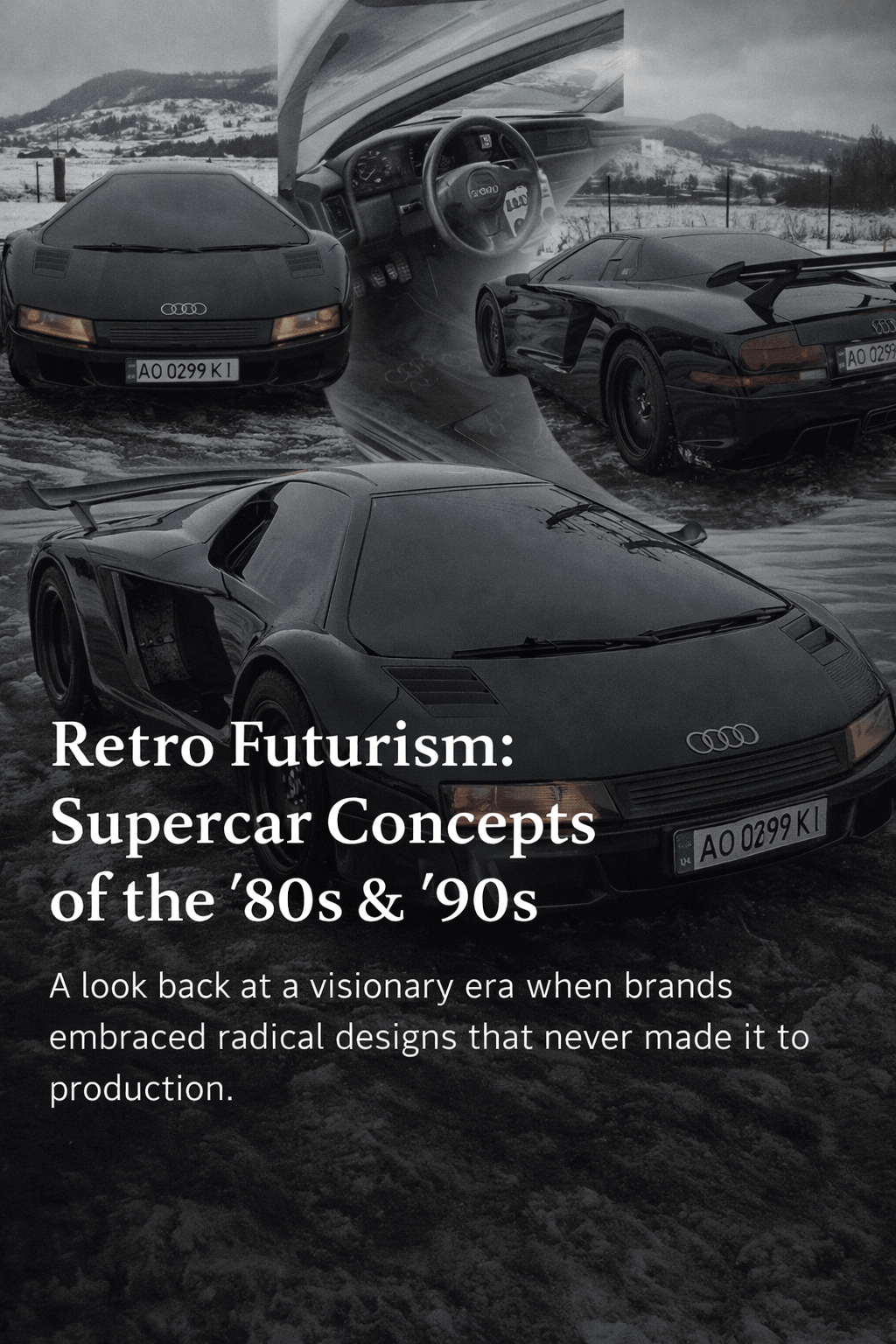

Manufacturers like Audi and others stepped far beyond traditional design rules, creating concept supercars that looked like they had arrived from decades ahead. These machines weren’t built purely for production—they were visions of the future, experimental statements that blended engineering with art.
The Wedge Era: Design Like Nothing Before
One of the most defining features of this era was the aggressive wedge shape. Cars sat impossibly low to the ground, with sharp angles, flat noses, and long, sculpted bodies. The goal wasn’t just aesthetics—it was aerodynamics.
Inspired by aerospace engineering and racing technology, designers explored airflow like never before. Every line, vent, and curve had a purpose. These cars looked fast even when standing still.
Today, as automotive design becomes more refined and regulated, there’s a growing appreciation for this fearless period. Collectors, designers, and enthusiasts continue to look back at these concepts—not as outdated experiments, but as timeless inspirations.